
RCC INSTITUTE OF
TECHNOLOGY IS NOW
YORKVILLE UNIVERSITY
The History
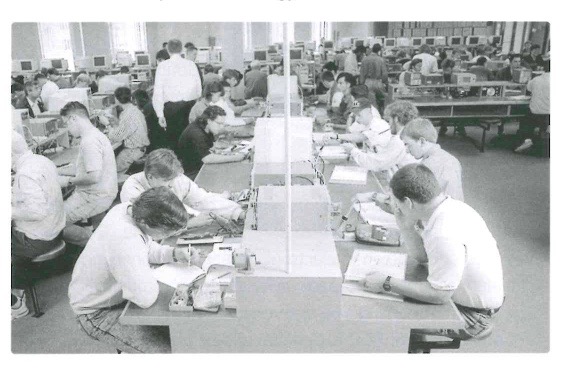
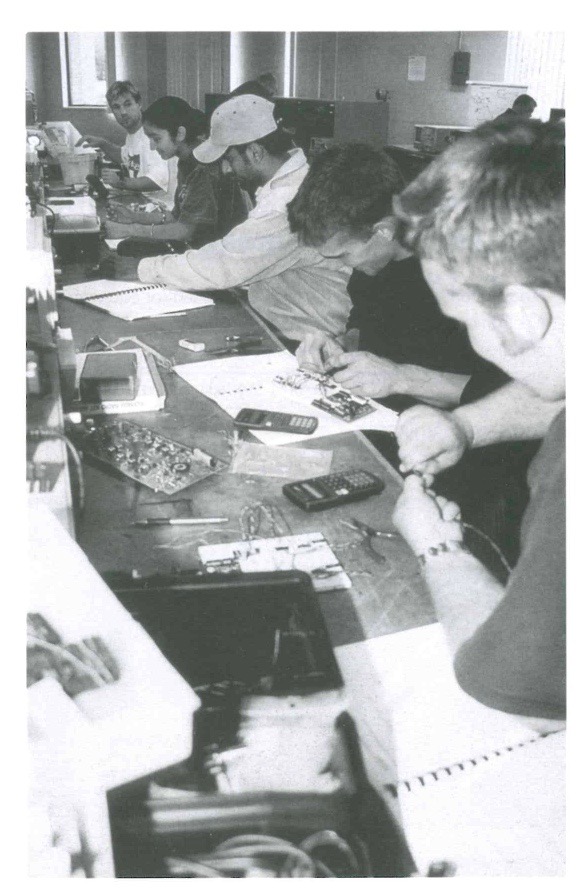
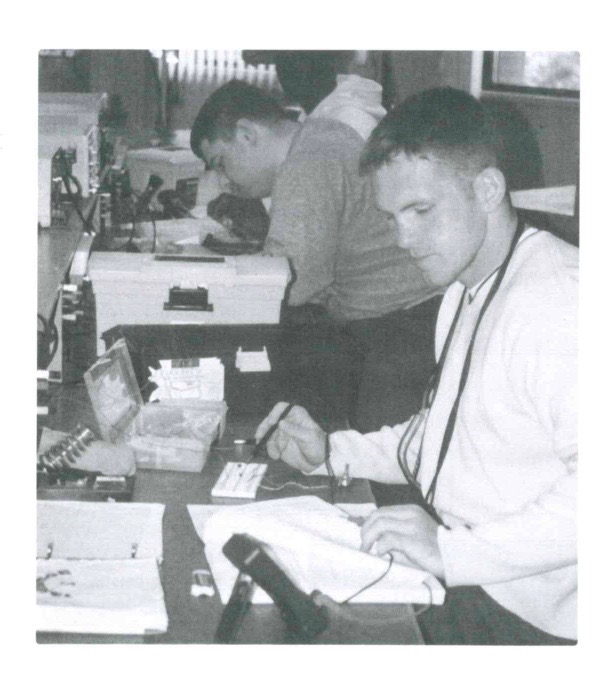
During its 90-year history, the Radio College of Canada has played a leading role in technology training and education in Canada. While its past provides evidence of the Institution’s leadership, RCC’s reputation is inextricably linked to the accomplishments of its nearly 40,000 graduates who have contributed to Canada’s high technology sectors.
Founded in 1928 by entrepreneur J. C. Wilson, the Radio College of Canada’s aim was to examine and qualify radio servicemen of the British Dominions. In 1937 the College was acquired by R. Christopher Dobson and additional and advanced programs were added, including courses in commercial radio operation, in response to increased demand with the growth in aviation.
In the 1940s RCC trained technicians and operators for essential services in government departments and Merchant Marines to aid in Canada’s contribution to the Second World War. The school also trained several classes of female radio operators to work in air stations. After the War ended the College continued its contribution with extensive rehabilitation training for Canadian and United States veterans.
With the advent of television in the 1950s, the College trained factory and service personnel. It also developed a new concept in electronics education, ‘electronic engineering technology’, a high-level program designed to train technologists equipped to assist professional engineers in matters of applied technology.
In 1957, the Association of Professional Engineers of Ontario established a Certification Board, which included Robert Poulter P.Eng, the third president of RCC, to establish certificate standards for qualified technologists and technicians and the accreditation of schools offering advanced courses. RCC and Ryerson were the first schools to be awarded full accreditation from this Certification Board.
During the late 1960s and early 1970s, the pace of change in technology accelerated dramatically with the introduction of digital electronics. Under the leadership of Chuck Coutts, Chris Dobson and Hartley Nichol, RCC developed the curriculum to service the new digital, computer and microprocessor-based occupations in data communications, facsimile, mobile phones, and computer technology. During the 1980s and 1990s, RCC remained specialized and focused on the fundamentals of leading edge technology in electronic engineering technology curriculum and graduated some of the best-prepared engineering technologists in Canada.
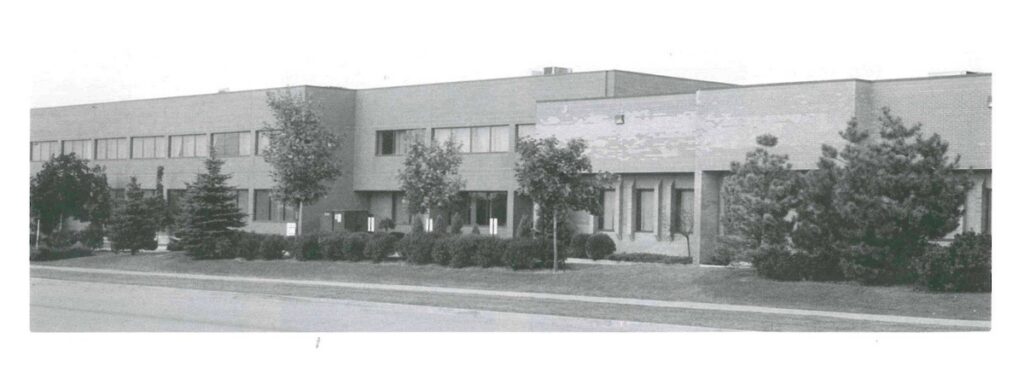
In the early 1990s, Hartley Nichol, President of the school since 1987, assumed full responsibility for the college, and RCC moved to its present facility, a campus on Steeles Avenue West in Vaughan, Ontario.
In 2004, RCC achieved consent to offer bachelor’s degrees. RCC Institute of Technology was the first and only Ontario private college to achieve this status. In that same year, Dr. Rick Davey was appointed RCC’s sixth President, and the Institution began to diversify its programming to include Computer Information Systems. In 2008, RCC Institute of Technology acquired the International Academy of Design and Technology, a well-known private college founded in 1983 as the International Academy of Merchandising and Design. This expanded RCC’s offerings to include a Bachelor of Interior Design and the Toronto Film School programs.
In 2017 RCC amalgamated with its parent institution, Yorkville University, thus establishing Yorkville University/Ontario.